Description
Everything Under the Sun (2025)
human gnomal sundial, six season endemic garden
Fremantle Biennale, Walyalup
There is nothing new under the sun, but there are new suns.
– Octavia E. Butler, Parable of the Talents
In this quote from her novel Parable of the Talents, Octavia E. Butler suggests that while human experiences and patterns of behaviour may repeat throughout history, each individual and generation brings a unique perspective and potential for change. It implies that while history may seem cyclical, with recurring themes of power struggles, inequality, and social unrest, there is always the possibility for new ways of thinking, acting, and creating a different future – through new ideas, new forms of resistance, new ways of organising, or new approaches to building a better world and creating a more just and equitable future.
The conceptual starting point of Everything Under the Sun is a consideration of the sun as a commons, preparing us for a changing future through collective thinking towards climate justice.
Whilst we view the sun as a common resource, it impacts and benefits individuals in dramatically different ways. So, how can we collectively think about things that are held in common? How do we share, value and protect them as we move into the future? Everything Under the Sun is proposed as a discursive place to ask these questions and collectively think about these things we hold in common.
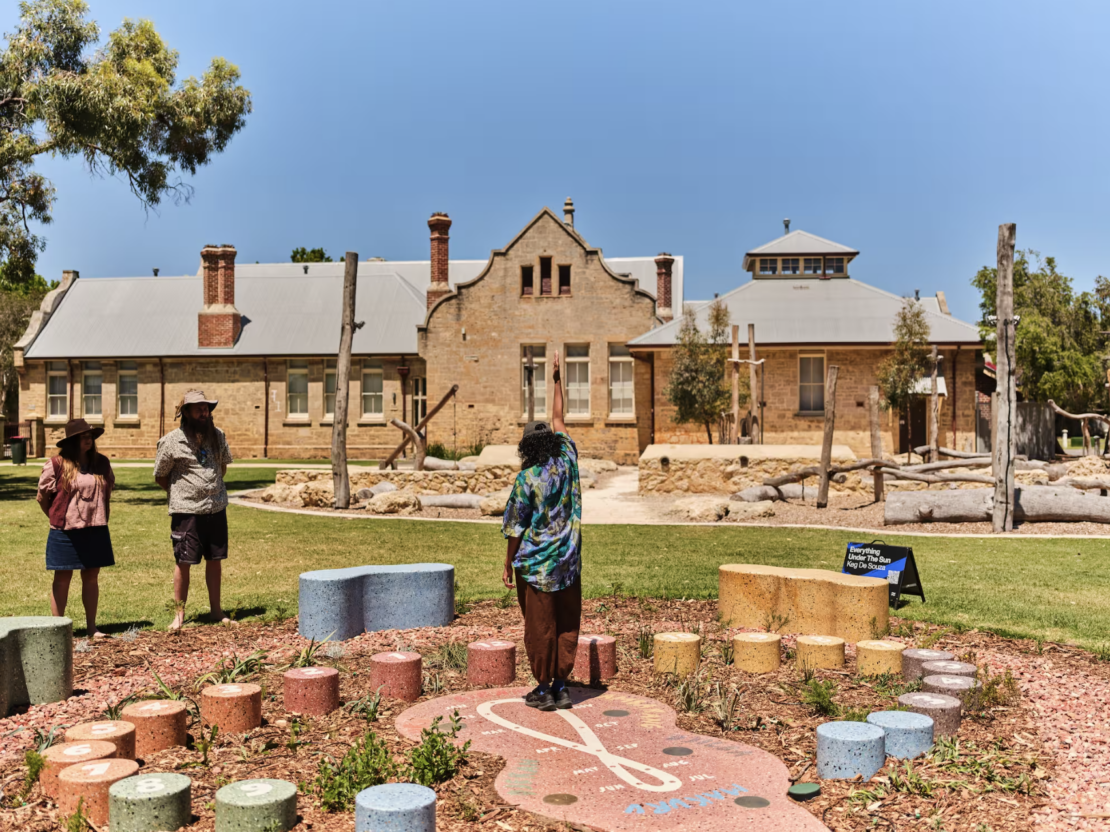
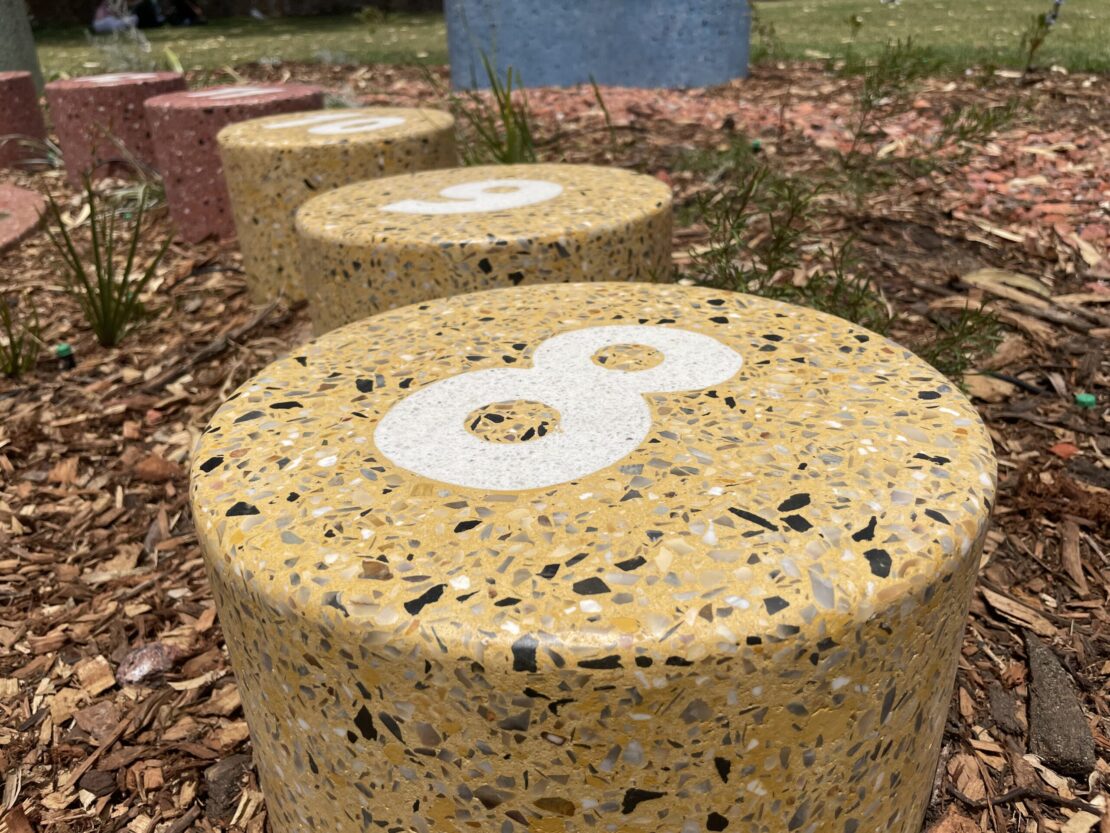
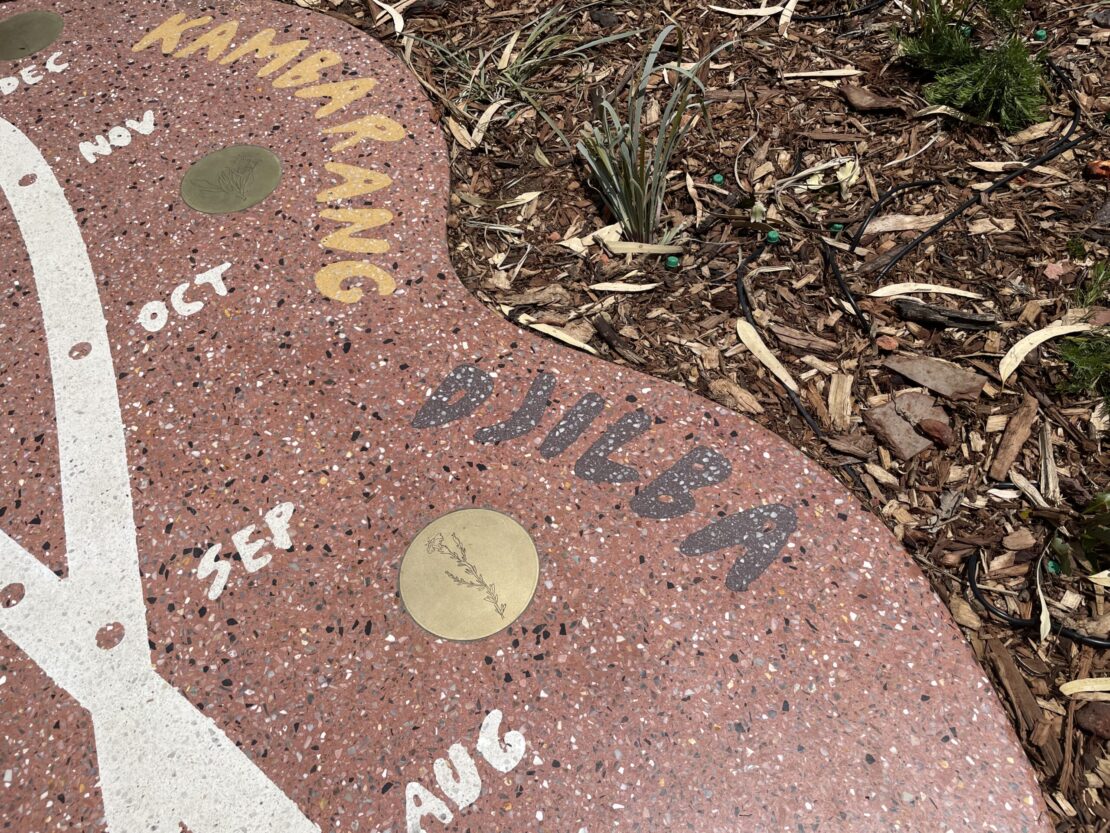
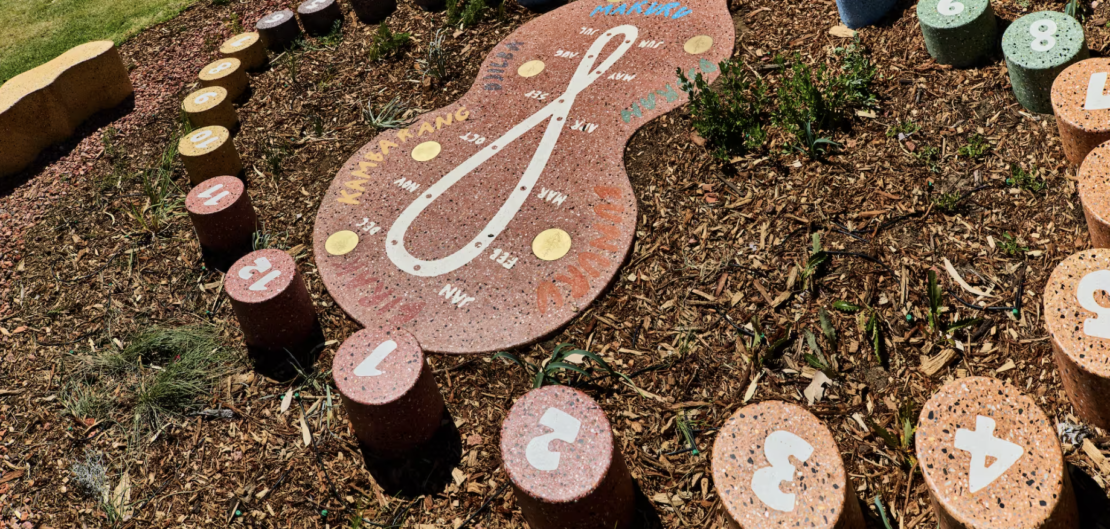
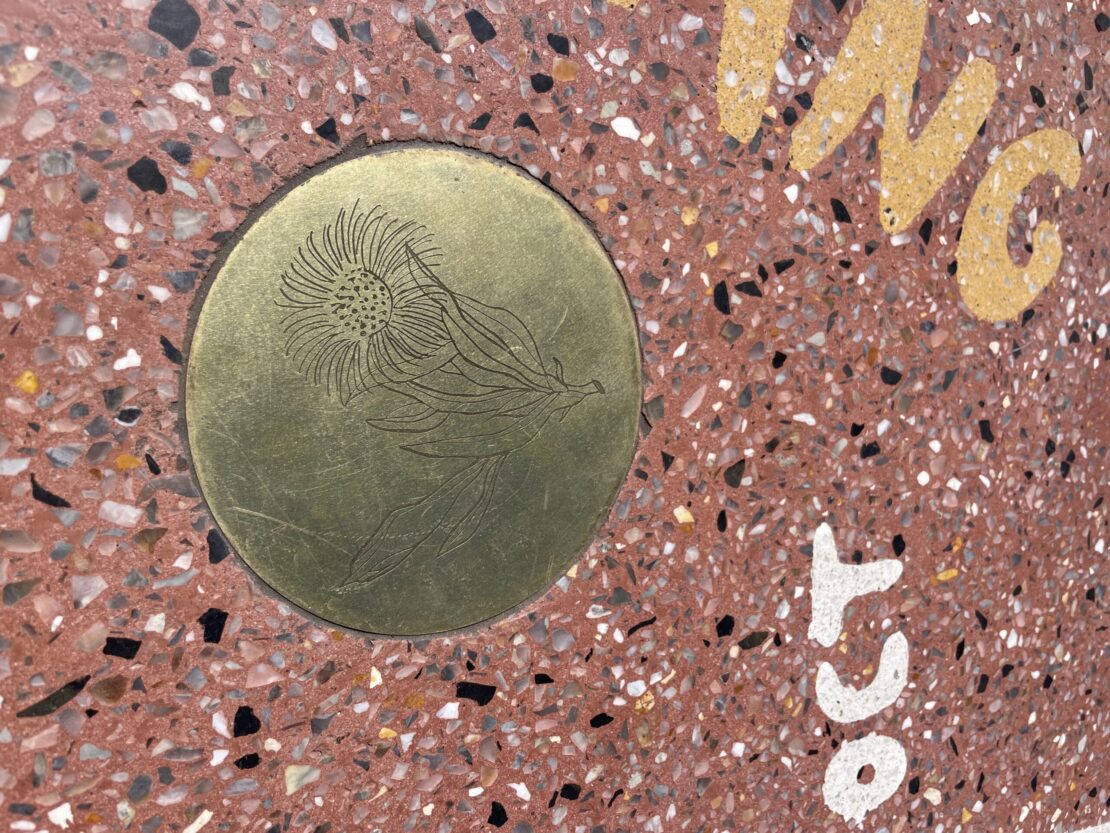
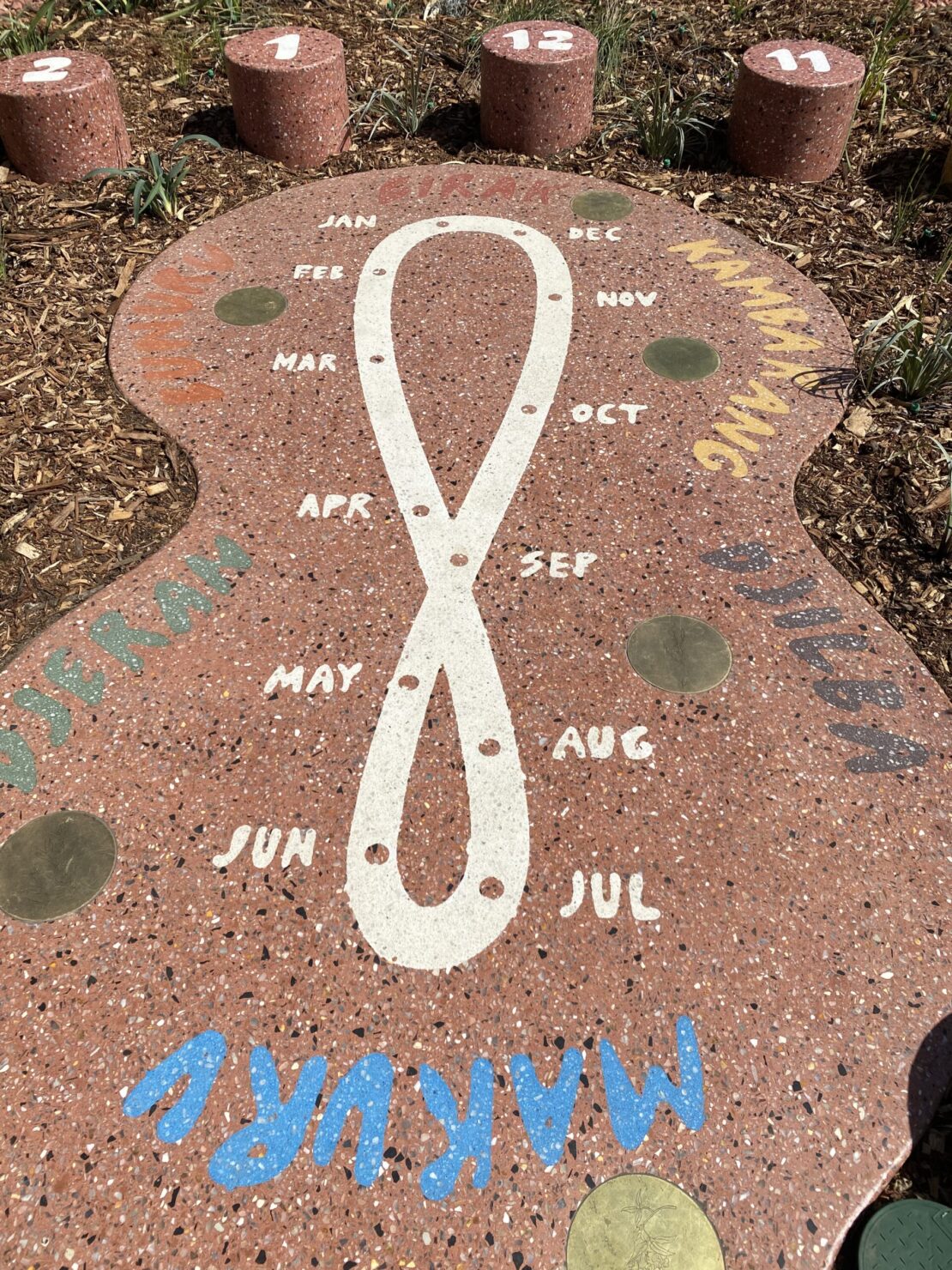
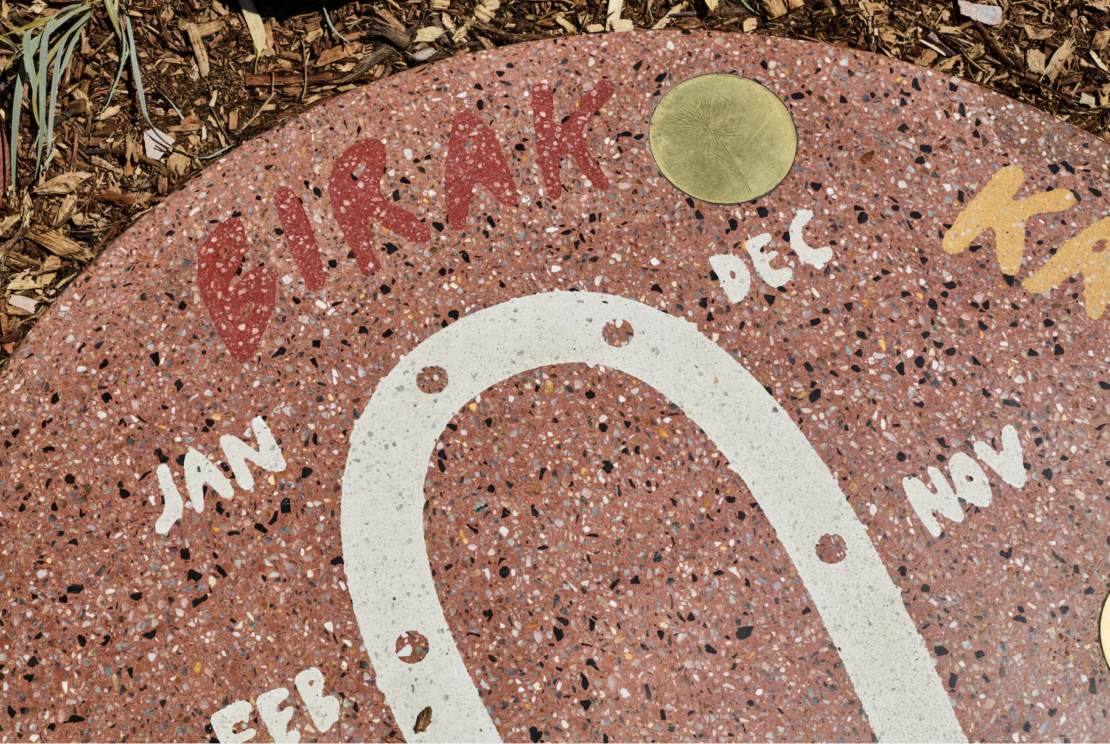
At the heart of the work is a large human gnomon sundial, inviting visitors to stand, raising your arm and casting your shadow to become a timekeeper. This gesture—at once ancient and intimate—evokes the passage of time, connecting the past, present and future. The terrazzo blocks circling the central plinth are time markers that double as stepping stones, an invitation to play in amongst an endemic learning garden, created in collaboration with Richard McDowell and Yabini Kickett. Featuring seasonally significant native plantings as timekeepers, the garden responds to the six Noongar seasons while also tracing the ecological impacts of colonialism. The reintroduction of local species tells stories of displacement and revival—revealing the enduring legacies of empire on the land.
Before Eastern Standard Time was adopted widely, communities often relied on local solar time, which varied based on longitude. This meant that midday in one location could vary from its neighbouring town. With the rise of railways and telegraph communication in the 19th century a homogenised way of thinking about time was pushed across different geographic locations, with trade and communication, as a key concern. Shifting thinking about time away from being local, non-linear, deep and seasonal – in essence, dissociating time from natural cycles.
Everything Under the Sun asks you to draw attention to multiplicities of time. Using the sun, bodies and plants to tell time. Plants are time keepers – these endemic plants tell stories of the land, represent changing seasons through blooms, plants themselves take time to grow, plants have a life cycle. Everything Under the Sun invites attention to the time that a garden takes to grow. It begins as seedlings and sprouts, and slowly reveals itself over the year, as it grows and blooms with the passing of the six Noongar seasons.
Everything Under the Sun
There is nothing new under the sun,
but there are new suns.
– Octavia E. Butler, Parable of the Talents
Octavia E. Butler’s words remind us:
while patterns repeat,
new perspectives emerge.
As time passes, it offers a shift –
a way to see, organise, resist, rebuild.
Everything Under the Sun begins with the sun as a commons –
A shared resource, but not experienced equally.
It’s light touches everyone,
but what it offers – and what it takes –
is unevenly distributed.
How do we think collectively
about what we hold in common?
How do we care for shared resources
in a time of ecological urgency and social imbalance?
At the heart of this work is a sundial.
Step into it.
Raise your arm.
Cast your shadow.
Through this gesture, you become a timekeeper.
Encircling the centre are markers of time,
terrazzo stepping stones of play,
set within an endemic learning garden.
This garden grows with meaning –
each plant a keeper of time,
each bloom a signal of a Noongar season,
each root a thread through history.
Here, time grows, heals, resists.
These plants hold stories –
of Country, of knowledge systems,
of ecological disruption,
and of repair.
Each species reintroduced here
carries with it the memory of what was lost,
and possibilities of what can be restored.
The plants speak quietly of displacement and return.
Before global time zones –
before standardisation flattened time into uniformity,
before clocks ruled the hour,
we followed the sun.
Time was local, responsive,
tied to land, light and seasons.
But with steel rails and telegraph wires,
came the flattening of time –
Now linear, extractive, disconnected.
Dislocating time from Place.
Everything Under the Sun calls us back
to deeper ways of knowing.
Drawing attention to multiplicities of time.
Here the sun, bodies and plants tell time.
To time that is circular and seasonal –
held in the slow unfolding of leaves
through the six Noongar seasons,
in the stretch of shadows,
in the patience of plants.
All under the gaze of the same sun.
—
Everything Under the Sun
Keg de Souza
Curator: Annika Kristensen
Planting curator & Associate Artists: Richard McDowell & Yabini Kickett
Associate Artist (Public Programs): Sharyn Egan
Fabrication: Jahne Rees, Scape-ism
Photos: 6 & 9 Thomas Earnshaw
Photo: 1 Duncan Wright
Thanks: Fremantle Biennale team; City of Fremantle; Fremantle Council and Cass Lynch for early conversations on plants as time keepers.
The project is supported by: Creative Australia; the NSW Government through Create NSW and the Fremantle Biennale.
Ongoing care for the garden is thanks to the City of Fremantle.
Everything Under the Sun grows in Walyalup, on the unceded lands of the Whadjuk people we acknowledge their continued connection and deep care for Country. Always was, Always will be.