• Home
  • Projects
    • Growth in the Shadows
    • Blue Haze: Awaba
    • If a coconut falls
    • Monumental as Anything
    • Soil Stories of Coranderrk
    • Shipping Roots
    • Blue Haze
    • Green Hell
    • Fleece Fugitives
    • Nganga toornung-nge dharraga Bunjil
    • Not a Drop to Drink Cartographies
    • Not a Drop to Drink
    • Convivial City
    • North Melbourne School of Displacement
    • The only rock we eat
    • Things I learnt in a hot tub
    • Common Knowledge and Learning Curves
    • Edible stories from the food bowl
    • the earth affords them no food at all
    • Changing Courses
    • Appetite for Construction
    • Abundance: Fruit of the Sea, Bounty of the Mountains
    • Redfern School of Displacement
    • Circular Questioning
    • Preservation
    • Temporary Spaces, Edible Places: New York
    • Temporary Spaces, Edible Places: Vancouver
    • If There’s Something Strange in Your Neighbourhood…
    • Temporary Spaces, Edible Places: Isle of Skye, Scotland
    • Temporary Spaces, Edible Places: London
    • This Must Be The Place
    • Vertical Villages (with ruangrupa)
    • Tropical Thunder
    • Gonflables et amuse-bouches
    • Living Under The Stars
    • Impossible Utopia
    • Emeraldtown: Gary, Indiana
    • ReMake Estate
    • Pemulwuy Dream Team
    • Whatever Floats Your Boat
    • Redfern Waterloo: Tour of Beauty
    • unReal Estate
  • Publications
  • Info
  • News
  • Contact

Temporary Spaces, Edible Places: London

15 June 2014

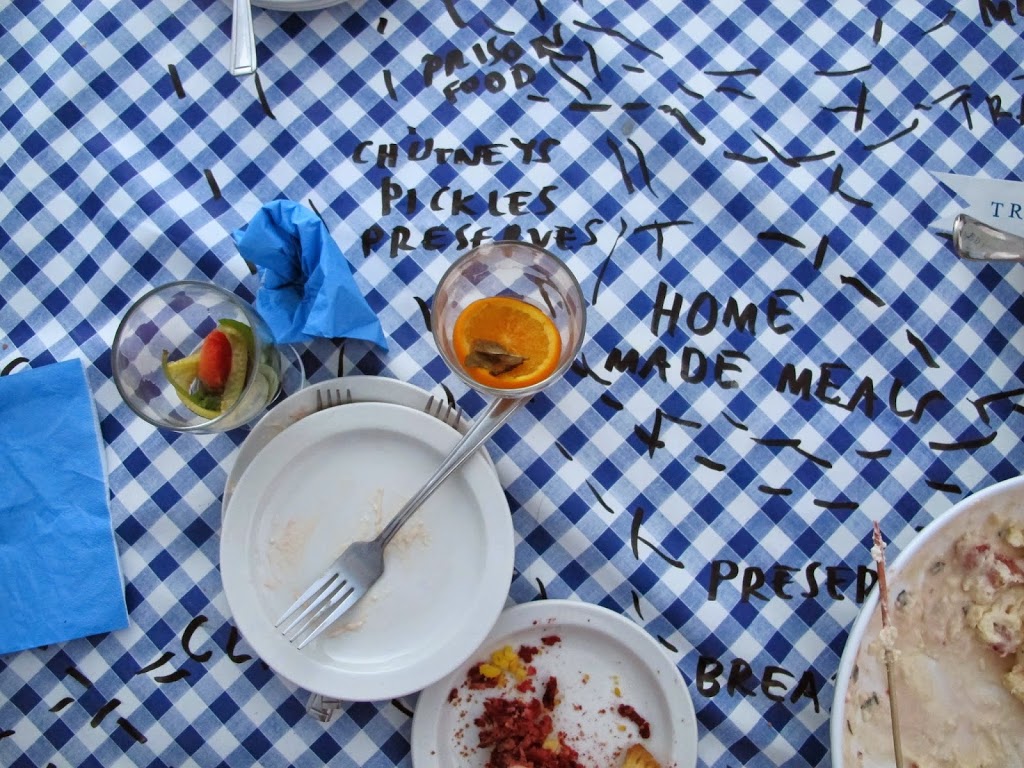
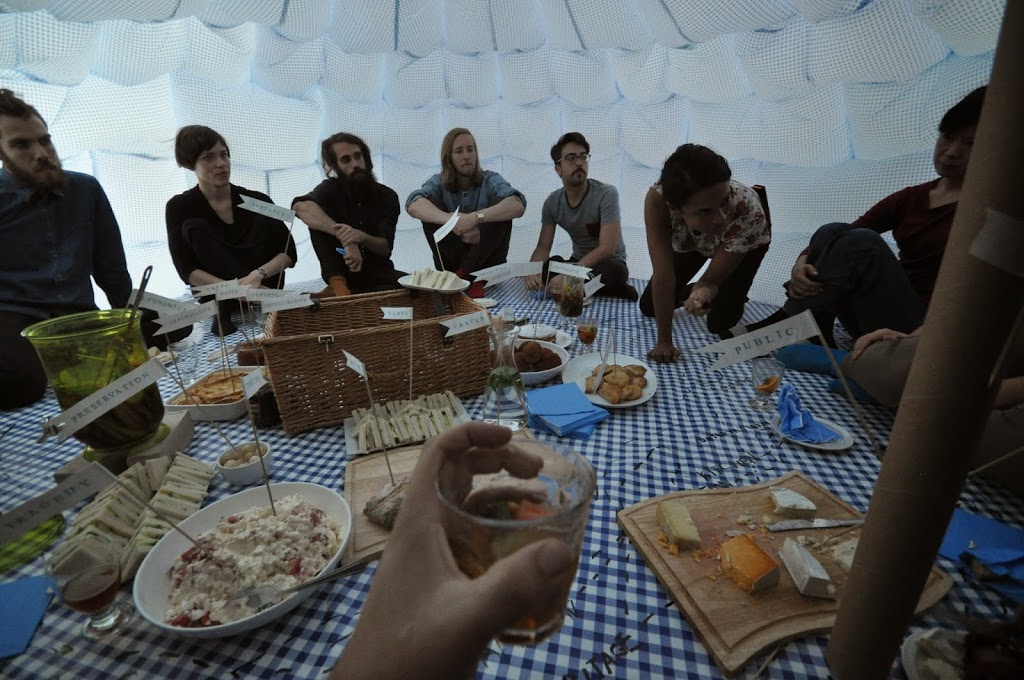
Images from the picnic I hosted inside the inflatable structure I designed to fit within the Delfina Foundation gallery space. I cooked traditional English food as a means to discuss space. For example I made cucumber sandwiches as a way to discuss class and privilege (and access to certain spaces/architecture), as the English aristocracy ate them to show they didn’t need any sustenance as they had other people to do their labour and the sandwiches, with their finely sliced cucumber and white bread with no crusts had almost no nutritional value. Another example was the Cornish Pasties I made to talk about various things including portability, nomadic architecture and sustenance (such as inflatables of course) as miners used to take them down the mines as they were a portable snack that had much sustenance to keep them going during the long hard work days. As the picnickers ate and we spoke I mapped the discussion onto the flooring over the 3 hour period, leaving a giant cartography of the conversation.
This event is the beginning of a larger discussion and mapping project exploring intersections between food and space. I am currently producing a ‘cook book’ of texts and maps developed out of the dialogue.