Description
Garden of Strategies (2026)
pressed plants, glass, overhead projector
Private Collection
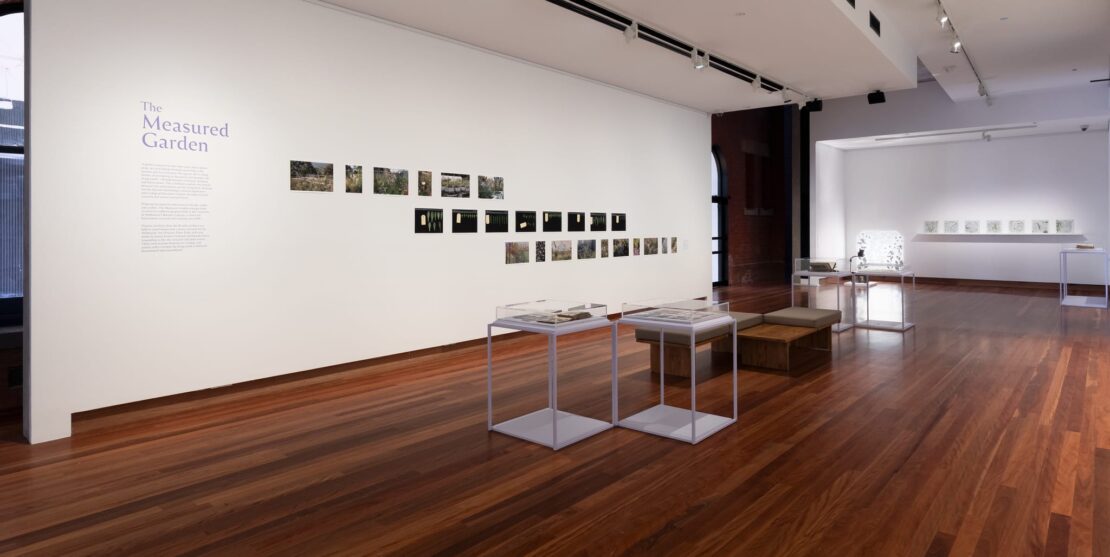
Exhibited as part of The Measured Garden, Ian Potter Museum of Art
Commissioned by Melbourne Arts Precinct with the University of Melbourne
Curated by Julia Murphy
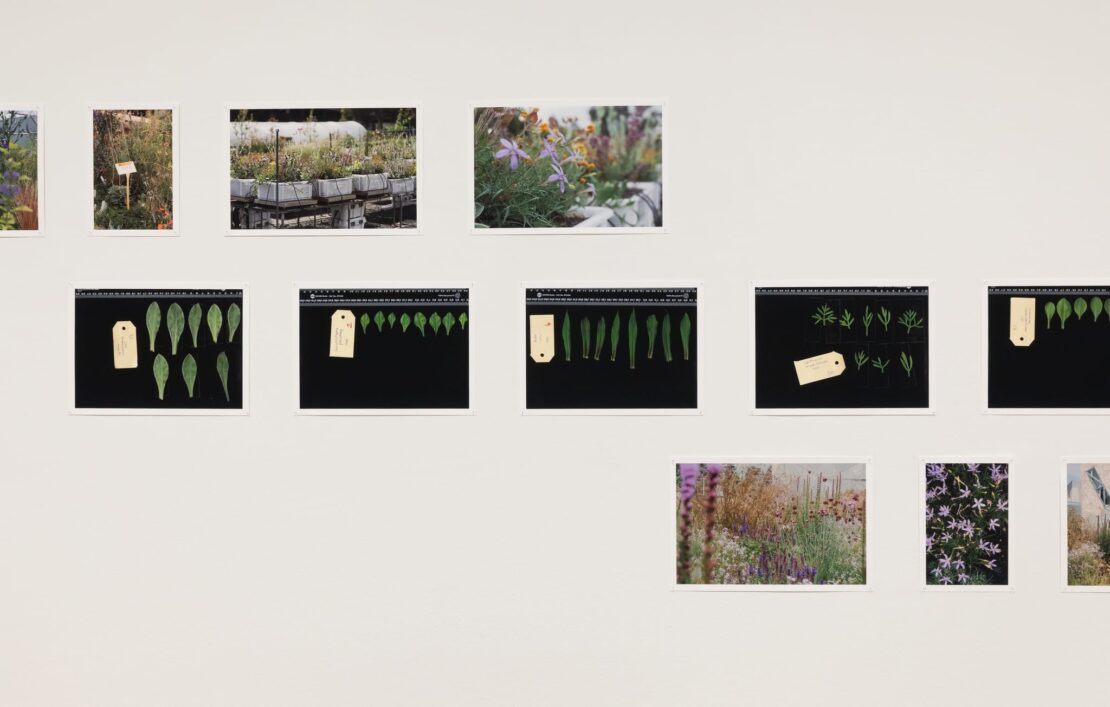
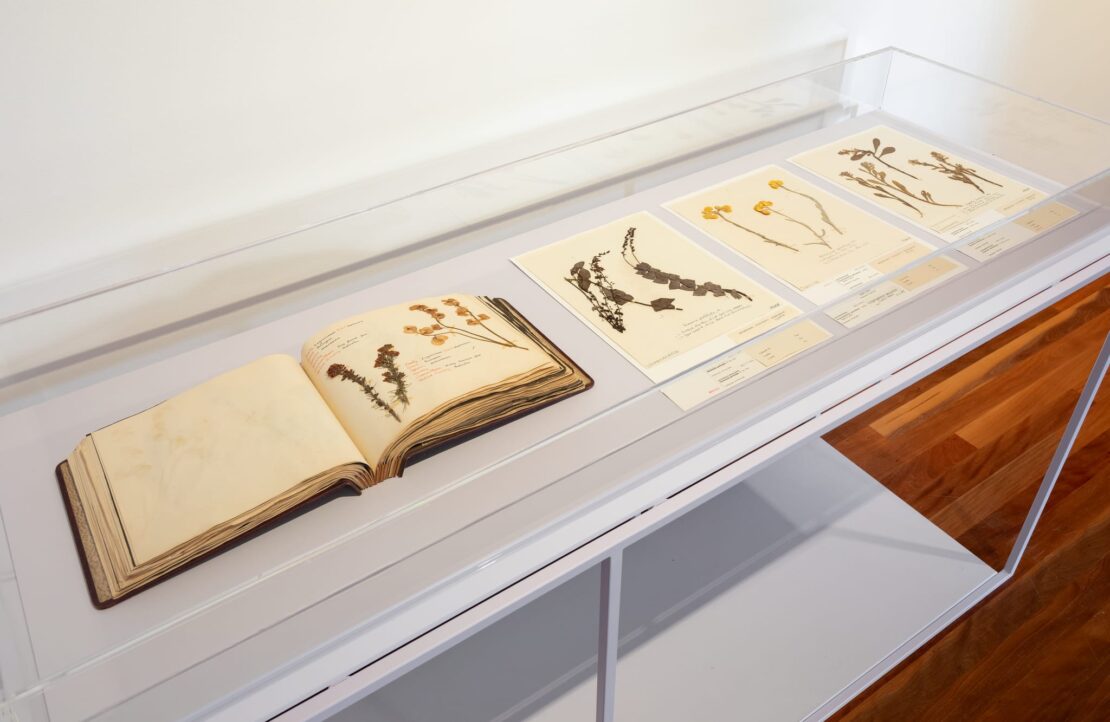
Garden of Strategies engages with the archival and living knowledge of the University of Melbourne’s Burnley campus, drawing on the Arts Precinct Plant Trials research developed for the future Laak Boorndap in collaboration with MAP Co. The project creates a layered, material exploration of botanical classification, storytelling and care, focusing on eight species selected from these trials in collaboration with plant scientist Dr Dean Schrieke. Here, scientific observation undergoes a process of translation into a particular tactile and visual form.
The project is situated on unceded Wurundjeri Woi Wurrung Country of the Kulin Nation. Prior to colonisation, this area of Naarm now known colonially as central Melbourne – including the site of Federation Square – formed part of an extensive wetland system along the Birrarung. These wetlands supported rich biodiversity and Indigenous cultural practices, including fishing, gathering and land management. Colonisation and urban development have since transformed this hydrological landscape, reshaping access to water and ecological systems. In contrast to this history of abundant water, many of the species selected in the Arts Precinct Plant Trials have been chosen for their drought-tolerance.
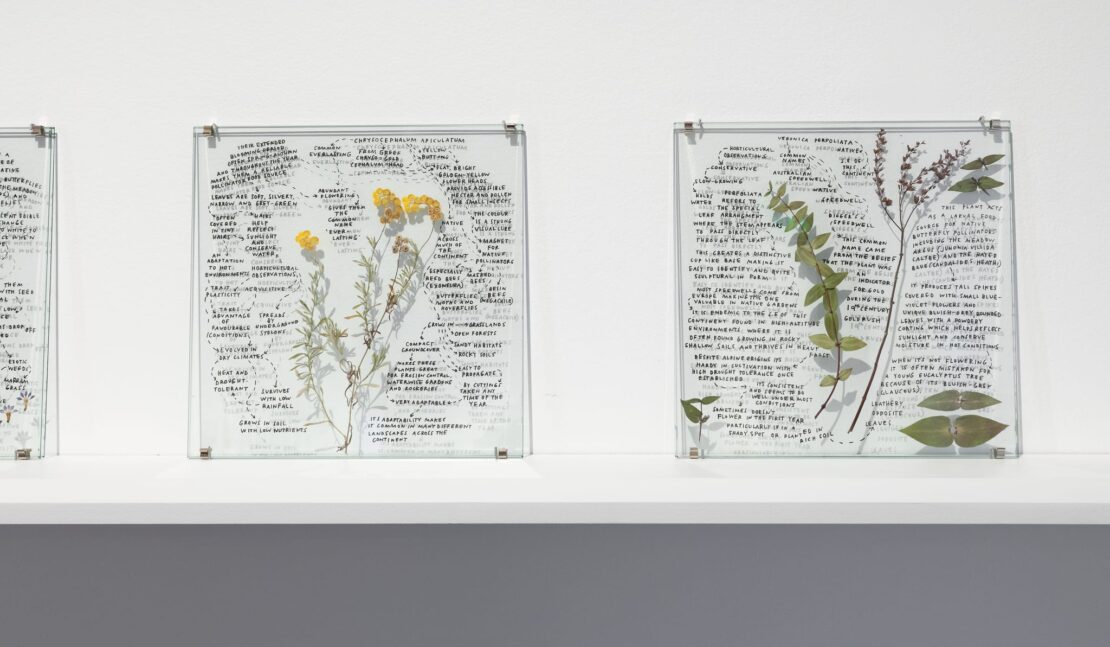
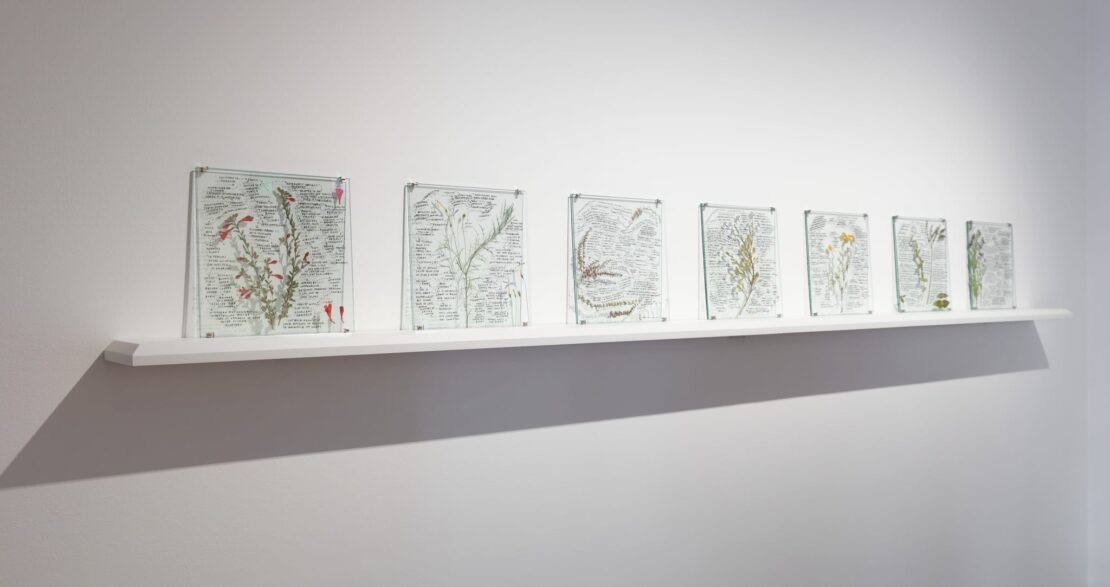
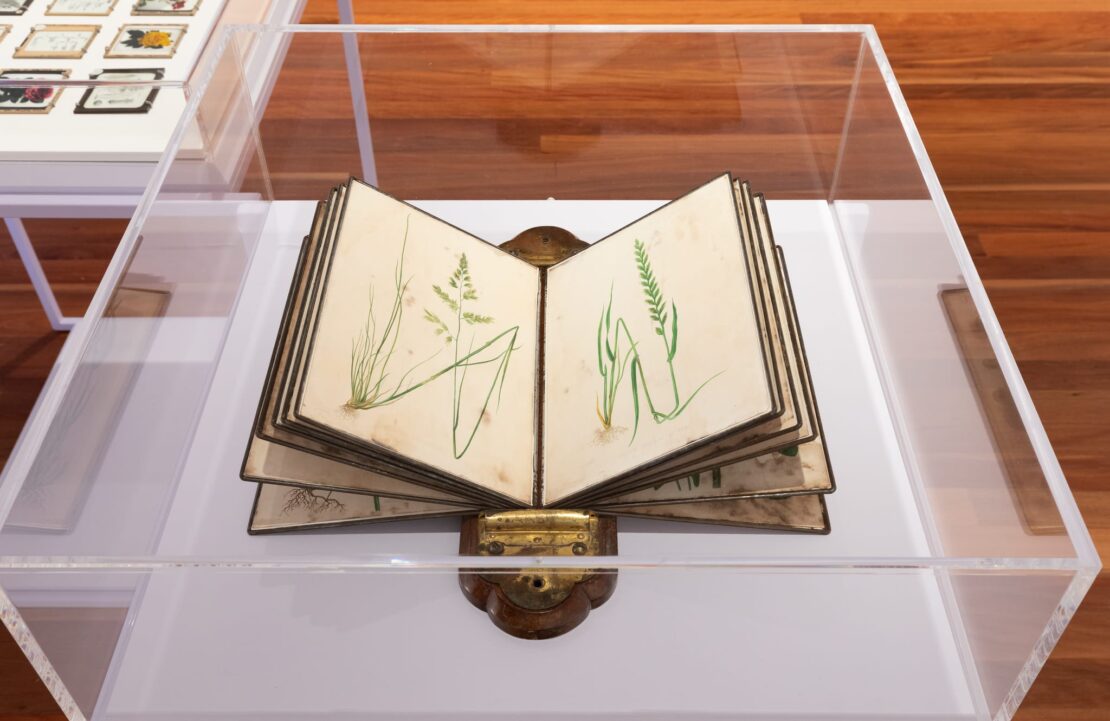
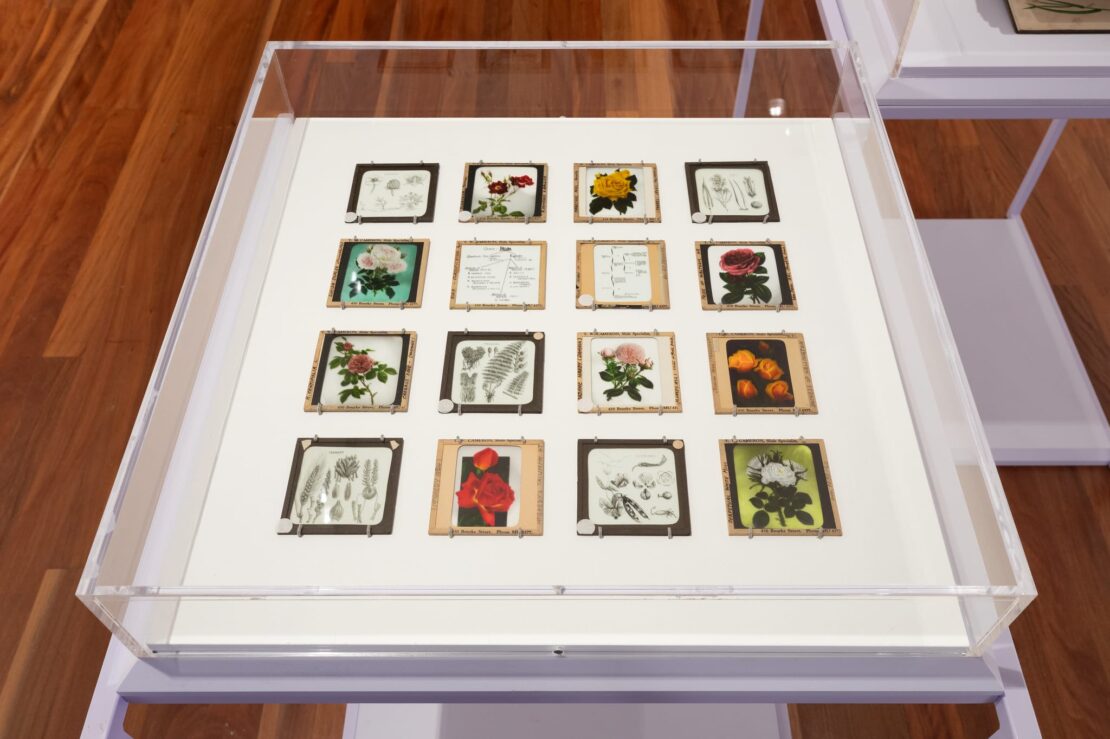
At the centre of the work is a series of glass slides, each dedicated to a single species. These function as both delicate objects and dense information carriers: text is silkscreened directly onto the glass surface, with pressed plant specimens – that have been taken directly from the Plant Trials – are held in place with another glass sheet, physically anchoring knowledge to plant matter. The result is a merging of archive and specimen, where data, story and material coexist. These are inspired by the magic lantern glass slides held in the Burnley archives that feature early photographic images of plants, botanical diagrams and hand painted illustrations on glass plates sandwiched with another piece of glass on top to protect the image. These were used from the 19th century at Burnley and projected using lantern devices, they were tools for education, storytelling and the circulation of visual knowledge.
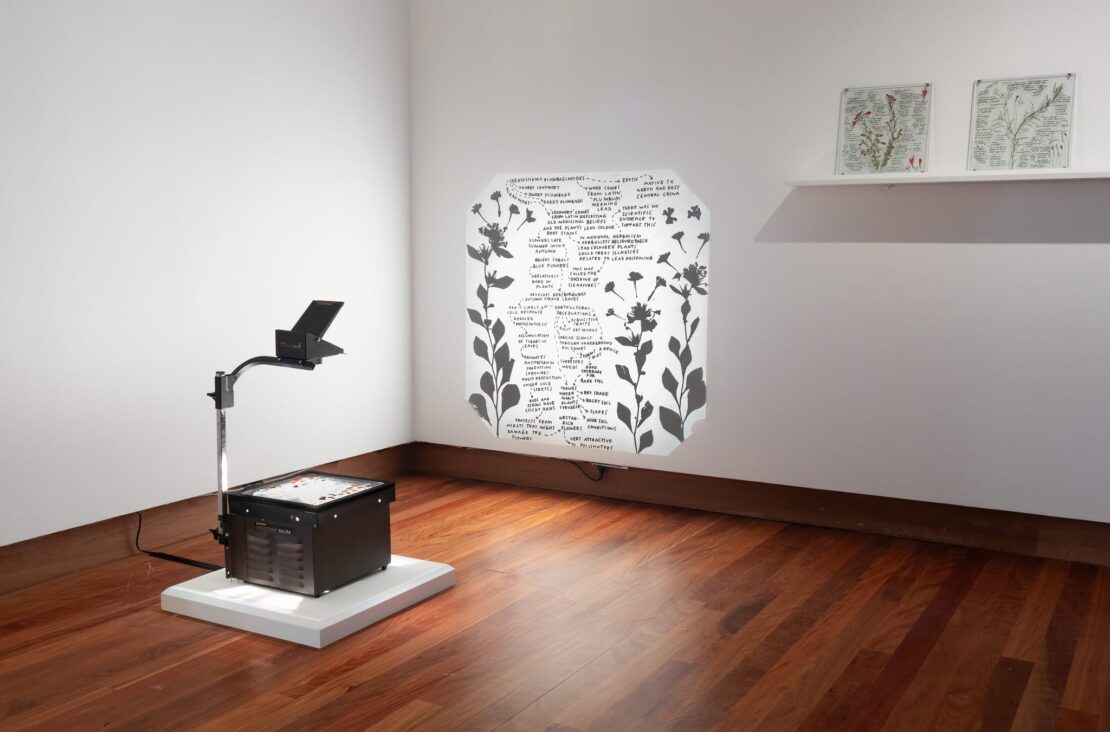
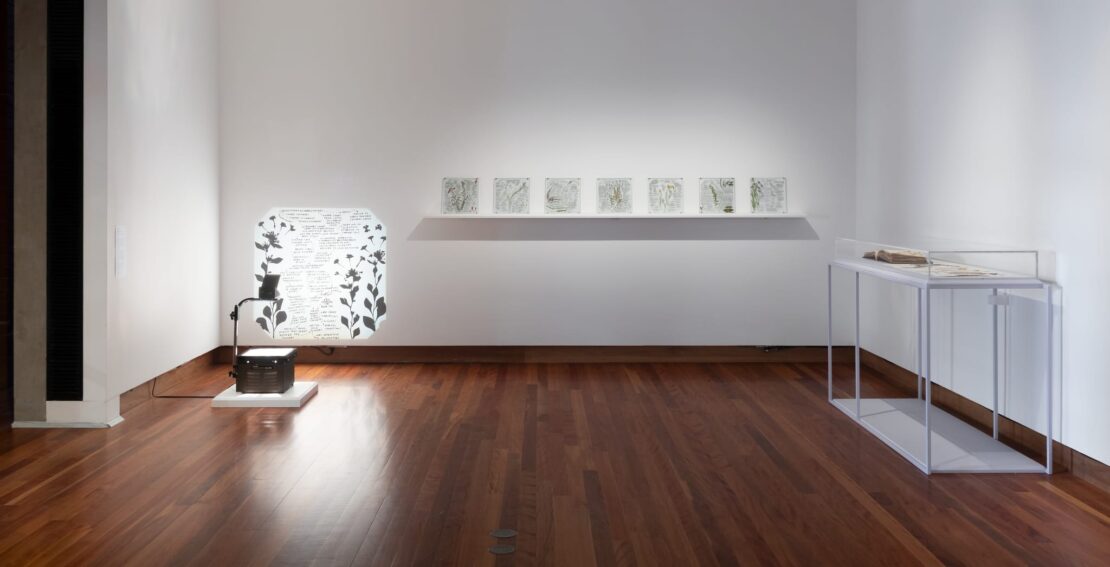
In the exhibition at the Ian Potter Museum of Art, these over scaled slides are activated through the use of overhead projectors – another form of pedagogical display historically associated with classrooms, lectures and institutional knowledge sharing. Emerging in the mid-20th century and widely adopted in schools and universities from the 1960s onward, overhead projectors enabled educators to present transparent sheets to large groups, often annotating them live to guide collective attention. This technology shaped a particular mode of teaching: sequential, performative and materially grounded – where knowledge was built in real time through projection, layering and gesture. Projected at an enlarged scale, the slides shift from intimate objects to immersive visual fields, making their layered content legible in space. This mode of display foregrounds the act of teaching and transmission, positioning the work within a lineage of educational technologies while also questioning how knowledge is framed, mediated and received.
Each species is framed through ecological categories used in the Burnley trials – identified as acquisitive or conservative, and as native or exotic. These classifications describe survival strategies: such as acquisitive plant species grow quickly in resource-rich conditions with thin, short-lived leaves, while conservative species grow more slowly but have thicker, longer-lasting leaves that help them survive in harsh environments. In the context of rooftop environments, these distinctions highlight how plant selection responds to heat, exposure, shallow substrates and limited water availability in built conditions.
The Arts Precinct Plant Trials operate as an adaptive testing ground for Melbourne’s changing urban climate. As temperatures rise and weather patterns become more extreme, rooftop landscapes such as those proposed for Laak Boorndap require vegetation capable of surviving intensified, artificial environments. At the same time, the project reflects on the expectations placed on public gardens to perform visually – maintaining fullness, regular blooming cycles, and immediate aesthetic impact – often in tension with ecological resilience and long-term survival.
The information embedded in each slide extends beyond scientific traits, weaving together scientific metrics and horticultural observation with folklore, etymology, botanical histories and contemporary research. Practical knowledge – such as soil preferences, water use and pollinator relationships – sits alongside narrative fragments and cultural meanings, producing a more holistic portrait of each species. In doing so, the work challenges the separation between scientific and vernacular knowledge, positioning plant life as something understood through both data and story.
Crucially, the project operates as a form of translation, opening up the depth of the Burnley plant trial research to broader publics. By reworking technical material into visually engaging and materially intimate objects, it makes institutional knowledge accessible beyond specialist contexts. The glass slides act as a public interface to otherwise dense research, inviting sensory and immediate engagement with plant systems and their urban applications. In this sense, Garden of Strategies seeks to not only preserve and reflect the archive but activate it – extending its reach and reframing it as a shared resource grounded in everyday encounters with plants, cities and changing environments.
Thank you for sharing knowledge and time:
Dr Dean Schrieke, Research Fellow in Green Infrastructure, Burnley Campus, University of Melbourne
Hannah Martin, Research Assistant to Dean Schrieke, Burnley Campus, University of Melbourne
Claire Farrell, Associate Professor (Green Infrastructure) and Director, Burnley Campus, University of Melbourne.
Jane Wilson, Archivist, Burnley Campus, University of Melbourne
Zena Cumpston, Barkandji people, Indigenous plant researcher
Read more:
Wong, E. (2026) Revealing Plant Stories: Keg de Souza, Landscape Architecture Australia
Mulqueen, K. New exhibition unearths stories and science behind world-first naturalistic garden, Fed Square